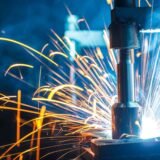

Manufacturing automotive electrical connectors and terminals? High-speed press machines deliver the precision and speed needed for mass production of small automotive components.
Automotive Connector Manufacturing Requirements
Automotive electrical connectors and terminals require:
- Ultra-high precision: ±0.02mm tolerance for reliable electrical contact
- High speed: 150-300 SPM for cost-effective mass production
- Consistency: Uniform quality across millions of parts
- Material efficiency: Minimal scrap for expensive copper alloys
High-Speed Press Machine Specifications
| Parameter | Specification |
|---|---|
| Tonnage Range | 30T – 200T |
| Stroke Speed | 150 – 300 SPM |
| Accuracy | ±0.02mm |
| Material Thickness | 0.1mm – 2.0mm |
| Material Width | 20mm – 300mm |
| Feed Length | 0.05mm – 200mm |
| Power | 5.5kW – 22kW |
Key Components for High-Speed Operation
1. Precision Crankshaft
- Hardened and ground steel
- Balanced for high-speed rotation
- Minimal vibration at 300 SPM
2. Wet Clutch & Brake
- Heat dissipation for continuous operation
- Fast response time
- Long service life (5+ million cycles)
3. Servo Feeder System
- ±0.02mm feed accuracy
- High-speed material advancement
- Programmable feed patterns
4. Die Protection System
- Material end sensing
- Part ejection verification
- Automatic stop on fault
- Electrical terminals: Battery terminals, wire connectors
- Connector housings: Plastic-metal inserts, hybrid connectors
- Contacts: Pin contacts, socket contacts, spring contacts
- Brackets: Small mounting brackets, clips, retainers
- Sensors: Sensor housings, mounting components
- Output: 50,000-200,000 parts per shift
- Scrap rate: <1% with proper die and feeder
- Uptime: 90%+ with preventive maintenance
- ROI: 12-18 months typical payback
- Precision ball bearings for smooth high-speed operation
- Wet clutch/brake for heat management
- Compatible with servo feeder systems
- Die protection system included
- CE certified for export markets
- 40-50% cost savings vs Japanese/Korean brands
- Proven performance in automotive supply chains
- Complete feeding line integration
- Spare parts and technical support
- After-sales service across Southeast Asia, Middle East, South America, Africa, Eastern Europe
- Function: Holds and unwinds metal coil
- Capacity: 1-20 ton coil weight
- Features: Hydraulic expansion, brake tension control, edge guiding
- Options: Motorized drive, loading car, coil storage
- Function: Removes coil curvature and internal stress
- Roller count: 9-21 rollers (more rollers = better straightening)
- Adjustment: Manual or motorized gap adjustment
- Material thickness: 0.3-6.0mm range
- Function: Precise material advancement into press
- Accuracy: ±0.05mm feed length
- Speed: Up to 200 feeds/minute
- Control: PLC with touchscreen interface
- Function: Maintains proper material tension between straightener and feeder
- Type: Photocell or mechanical loop
- Benefit: Prevents material damage, ensures smooth feeding
- Function: Support material before and after processing
- Features: Adjustable height, roller or belt surface
- Automotive: Body panels, brackets, frames
- Appliances: Washing machine parts, refrigerator components
- Electrical: Motor laminations, transformer cores
- Construction: Metal roofing, wall panels
- Furniture: Metal frames, brackets
- Synchronized control between press and feeder
- Safety interlocks for operator protection
- Common HMI interface option
- Pre-wired connection points
- Factory testing before shipment
- Single-source supplier (press + feeding line)
- Pre-tested system compatibility
- Competitive package pricing (10-15% savings)
- Complete technical documentation
- Installation and commissioning support
- Spare parts availability
- After-sales service across Southeast Asia, Middle East, South America, Africa, Eastern Europe
- Multi-step feed patterns (different lengths in one cycle)
- Variable feed speeds
- Automatic length calculation
- Recipe storage for quick changeovers
- Misfeed detection
- Material end sensing
- Production counter
- Fault diagnostics
- Remote monitoring capability
- No programming required
- Manual length adjustment
- Minimal training needed
- Easy to understand
- No electronics to troubleshoot
- Standard pneumatic components
- Low-cost replacement parts
- Quick repairs
- Part precision requirement < ±0.2mm
- Production volume > 50,000 parts/month
- Multiple products with frequent changeovers
- Progressive die stamping
- Material thickness < 0.5mm (thin material needs precision)
- Budget allows premium automation
- Future-proofing for growth
- Part precision requirement > ±0.3mm
- Production volume < 30,000 parts/month
- Single product or infrequent changeovers
- Simple blanking or forming operations
- Material thickness > 1.0mm
- Budget is primary constraint
- Existing shop has compressed air
- Servo package: Press + servo feeder + control integration (10% package discount)
- Air package: Press + air feeder + mounting (8% package discount)
- Complete line: Press + decoiler + straightener + feeder (15% package discount)
- Unbiased recommendations (we sell both types)
- Application-based selection (not one-size-fits-all)
- Factory-direct pricing
- Pre-tested integration
- Complete documentation
- After-sales support across Southeast Asia, Middle East, South America, Africa, Eastern Europe
- Uncoiler: Holds and feeds metal coil
- Straightener: Removes coil curvature
- Feeder: Precise material advancement
- Loop control: Maintains proper material tension
- Servo motor drive: Precise length control (±0.05mm)
- Programmable feed patterns: Multiple step feeding
- High speed: Up to 200 feeds per minute
- Quick die change compatibility
- Pneumatic operation: Simple and reliable
- Adjustable feed length: Manual or basic control
- Lower cost: Economical automation
- Easy maintenance: Minimal components
- Roller grip: Handles thick plates (up to 6mm)
- High torque: Moves heavy material
- Durable construction: Industrial-grade components
- Wide width capacity: Up to 2000mm
- Material thickness: Thin (<1mm) vs thick (>3mm)
- Material width: Narrow (<300mm) vs wide (>1500mm)
- Production volume: Low (<10k/month) vs high (>100k/month)
- Part precision: General (±0.5mm) vs precision (±0.1mm)
- Budget: Entry-level vs premium automation
- Control interface compatibility
- Synchronization signals
- Safety interlocks
- Mounting provisions
- Labor savings: 1-2 operators per shift
- Productivity increase: 30-50% higher output
- Scrap reduction: Consistent feeding = fewer errors
- Safety improvement: Reduced injury risk
- Single-source responsibility
- Pre-tested compatibility
- Competitive package pricing
- Complete technical support
- Spare parts availability
- Installation guidance
- Pilot hole piercing
- Notching and slotting
- Forming and bending
- Coining or embossing
- Final blanking
- Tonnage: 10-20% above calculated forming force
- Bed size: Accommodate die + feed clearance
- Shut height: Match die requirements
- Speed: Match production requirements (80-400 SPM)
- Feeding: Servo or mechanical roll feed
- Misfeed: Check feed timing, material tension
- Part sticking: Add air blow-off, check lubrication
- Burr formation: Sharpen or replace cutting edges
- Dimensional variation: Check material thickness, die wear
- Programmable slide motion: Customize stroke profile for each job
- Energy efficiency: 30-50% less power consumption
- Precision: ±0.01mm repeatability
- Flexibility: Quick changeover between jobs
- Reduced noise: No clutch/brake noise
- Better part quality: Optimized forming speeds
- Lower initial cost: 40-50% less than servo
- Proven technology: Decades of reliability data
- Simpler maintenance: Mechanical systems well understood
- Higher top speed: 600+ SPM possible
- Better resale market: Established used equipment market
- Deep drawing with variable speed profile
- Multiple operations in one stroke
- Precision forming with dwell time
- Short production runs with frequent changeovers
- High-volume single-part production
- Budget-constrained projects
- Simple blanking/piercing operations
- Maximum speed is critical (500+ SPM)
- Applications: Electronics, connectors, terminals
- Speed: 200-500 SPM
- Price: $55,000 – $85,000
- Applications: Automotive parts, motor laminations
- Speed: 150-350 SPM
- Price: $95,000 – $145,000
- Applications: Structural parts, appliance components
- Speed: 100-250 SPM
- Price: $165,000 – $230,000
- Frame: One-piece cast or welded steel
- Drive: Eccentric gear drive for smooth operation
- Clutch/Brake: Pneumatic or hydraulic, quick response
- Control: PLC with touchscreen, fault diagnosis
- Feeding: Servo roller feed for precision
- JH25-63T: 63 ton, 250 SPM, $58,000
- JH25-100T: 100 ton, 200 SPM, $98,000
- JH25-160T: 160 ton, 150 SPM, $175,000
- JH25-200T: 200 ton, 120 SPM, $225,000
- ISO 16092: Machine tool safety – Presses
- ANSI B11.2: Hydraulic power presses
- CE marking (Europe)
- OSHA 1910.217 (USA)
- Full tonnage throughout stroke: Maximum force at any position
- Variable stroke length: Adjust for different workpieces
- Overload protection: Relief valves prevent damage
- Better for: Deep drawing, molding, coining, embossing
- Slower speed: 10-60 strokes/minute typical
- Higher speed: 60-200+ strokes/minute
- Consistent stroke: Fixed length ensures repeatability
- Lower operating cost: No hydraulic oil changes
- Better for: Blanking, piercing, high-volume stamping
- Energy efficient: Flywheel stores kinetic energy
- Hydraulic: $85,000 initial + $4,000/year operating
- Mechanical: $75,000 initial + $2,500/year operating
- Exceptional rigidity and stability
- Uniform pressure distribution
- Minimal deflection under load
- Ideal for precision forming and molding
- Applications: Sheet metal forming, plastic molding
- Table size: 800x800mm to 1000x1000mm
- Price: $45,000 – $85,000
- Applications: Automotive parts, appliance manufacturing
- Table size: 1200x1200mm to 1500x1500mm
- Price: $95,000 – $150,000
- Applications: Structural components, forging
- Table size: 1800x1800mm to 2500x2500mm
- Price: $180,000 – $280,000
- Frame: Welded steel plate or cast steel
- Cylinder: Single or multiple hydraulic cylinders
- Control: PLC with touchscreen, pressure monitoring
- Safety: Light curtains, two-hand operation, pressure relief
- Y32-100T: $48,000 | 1000x1000mm | 150mm stroke
- Y32-200T: $88,000 | 1200x1200mm | 200mm stroke
- Y32-315T: $145,000 | 1500x1500mm | 250mm stroke
- Y32-500T: $265,000 | 2000x2000mm | 300mm stroke
Typical Automotive Applications
Material Considerations
| Material | Thickness | Applications |
|---|---|---|
| Copper Alloy | 0.2-1.0mm | Electrical terminals, contacts |
| Brass | 0.3-1.5mm | Connectors, decorative parts |
| Steel | 0.5-2.0mm | Brackets, clips, retainers |
| Stainless Steel | 0.3-1.5mm | High-temperature connectors |
| Aluminum | 0.5-2.0mm | Lightweight brackets |
Production Efficiency
High-speed press machines deliver exceptional productivity:
LAIFU High-Speed Press Solutions
LAIFU high-speed press machines (JH21 Series, 60T-200T) are designed for automotive connector and terminal production:
Why Choose LAIFU?
Get a high-speed press quote! Share your part specifications and production volume, and we’ll recommend the optimal machine for your automotive connector manufacturing.
Need continuous high-speed stamping production? Coil feeding lines automate material handling from coil to press, enabling uninterrupted high-volume manufacturing with minimal operator intervention.
What is a Coil Feeding Line?
A coil feeding line is an integrated system that unwinds metal coil, straightens the material, and feeds it precisely into a press machine. This creates a continuous production flow ideal for high-volume stamping operations.
Coil Feeding Line Components
1. Decoiler (Uncoiler)
2. Material Straightener
3. NC Servo Feeder
4. Loop Control System
5. Entry/Exit Tables
Coil Feeding Line Specifications
| Parameter | Range |
|---|---|
| Material Width | 50mm – 2000mm |
| Material Thickness | 0.3mm – 6.0mm |
| Coil Weight | 1 – 20 tons |
| Coil ID | 450mm – 610mm |
| Coil OD | Up to 2000mm |
| Feed Length | 0 – 9999mm (programmable) |
| Production Speed | 20 – 200 SPM (strokes per minute) |
Applications
Benefits of Coil Feeding Lines
| Benefit | Impact |
|---|---|
| Labor Reduction | Eliminates 2-3 operators per shift |
| Productivity | Continuous operation, 30-50% higher output |
| Material Savings | Optimized nesting, reduced scrap |
| Consistency | Uniform part quality, fewer defects |
| Safety | No manual coil handling, reduced injury risk |
| ROI | Typical payback: 18-30 months |
Integration with LAIFU Press Machines
LAIFU mechanical and hydraulic press machines (3T-3200T) integrate seamlessly with coil feeding lines:
Selection Guide
For thin material (0.3-1.5mm): Light-duty decoiler, 11-15 roller straightener, standard servo feeder
For medium material (1.5-3.0mm): Medium-duty decoiler, 15-19 roller straightener, heavy-duty servo feeder
For thick material (3.0-6.0mm): Heavy-duty decoiler, 19-21 roller straightener, high-torque feeder
Why Choose LAIFU Complete Solutions?
Get a complete coil feeding line quote! Share your material specifications and production requirements, and we’ll design the optimal system for your needs.
Choosing between servo feeder and air feeder for your press machine? This detailed comparison helps you select the right feeding technology based on precision, speed, budget, and application requirements.
Overview: Two Feeding Technologies
Servo Feeders use servo motors for precise, programmable material feeding. They represent modern automation technology with high accuracy and flexibility.
Air Feeders use pneumatic cylinders for material advancement. They offer simple, reliable operation at a lower cost point.
Detailed Comparison
| Feature | Servo Feeder | Air Feeder |
|---|---|---|
| Feed Accuracy | ±0.05mm | ±0.5mm |
| Max Feed Speed | 200 feeds/min | 60 feeds/min |
| Feed Length Range | 0-9999mm | 0-500mm |
| Material Thickness | 0.1-6.0mm | 0.3-3.0mm |
| Material Width | 50-2000mm | 50-800mm |
| Control System | PLC + Touchscreen | Pneumatic valves |
| Programming | Multi-step patterns | Fixed length |
| Setup Time | 5-10 minutes | 15-30 minutes |
| Power Requirement | Electric (220V/380V) | Compressed air (6-8 bar) |
| Price Range | $8,000 – $25,000 | $2,000 – $6,000 |
Servo Feeder Advantages
1. Superior Precision
Servo motor control achieves ±0.05mm accuracy, essential for progressive die stamping and precision parts manufacturing.
2. High Speed
Up to 200 feeds per minute enables high-volume production, matching fast press cycle times.
3. Flexible Programming
4. Quick Die Change
Touchscreen interface stores settings for different dies, reducing changeover time from 30 minutes to 5 minutes.
5. Advanced Features
Air Feeder Advantages
1. Lower Cost
Air feeders cost 60-70% less than servo feeders, making automation accessible for budget-conscious operations.
2. Simple Operation
3. Reliable
Fewer electronic components mean fewer failure points. Pneumatic systems are proven technology with decades of reliability.
4. Easy Maintenance
5. No Electrical Requirements
Only needs compressed air (already available in most stamping shops), no electrical wiring required.
When to Choose Servo Feeder
Choose servo feeder if:
When to Choose Air Feeder
Choose air feeder if:
ROI Comparison
| Factor | Servo Feeder | Air Feeder |
|---|---|---|
| Initial Investment | High ($15,000 avg) | Low ($4,000 avg) |
| Labor Savings | 1-2 operators | 1 operator |
| Productivity Gain | 40-60% | 20-30% |
| Payback Period | 12-18 months | 8-14 months |
| Long-term Value | Higher (flexibility) | Lower (limited) |
LAIFU Feeding System Packages
LAIFU offers both servo and air feeding systems integrated with press machines (3T-3200T):
Why Partner with LAIFU?
Not sure which feeder you need? Tell us your application details (material, part size, production volume, budget), and we’ll recommend the optimal feeding solution for your press machine.
Looking to automate your press machine feeding? This comprehensive guide covers auto feeding systems for mechanical and hydraulic press machines, helping you improve productivity and safety.
Why Automate Press Feeding?
Manual feeding limits productivity, increases labor costs, and poses safety risks. Automated feeding systems deliver consistent part placement, higher production speeds, reduced operator fatigue, and improved workplace safety.
Types of Press Feeding Systems
1. Coil Feeding Lines
Best for: High-volume stamping, continuous production
Typical applications: Automotive parts, appliance components, electrical contacts
2. Servo Feeders
Best for: High-precision stamping, flexible production
Typical applications: Electronics, precision parts, progressive die stamping
3. Air Feeders
Best for: Budget-conscious operations, simple applications
Typical applications: General stamping, lower-volume production
4. Roll Feeders
Best for: Thick material, heavy-duty applications
Typical applications: Structural parts, thick plate stamping
Feeding System Comparison
| Type | Accuracy | Speed | Cost | Best For |
|---|---|---|---|---|
| Servo Feeder | ±0.05mm | Very High | High | Precision work |
| Coil Line | ±0.1mm | High | Very High | Mass production |
| Air Feeder | ±0.5mm | Medium | Low | General stamping |
| Roll Feeder | ±0.2mm | Medium | Medium | Thick material |
Key Selection Factors
Integration with LAIFU Press Machines
LAIFU press machines (3T-3200T) are designed for seamless feeding system integration. Standard features include:
ROI of Automated Feeding
Typical payback period: 12-24 months
Why Choose LAIFU for Complete Stamping Solutions?
LAIFU provides integrated press + feeding system packages:
Request a complete feeding system quote! Tell us your material specs and production requirements, and we’ll recommend the optimal solution for your application.
Progressive die stamping enables high-volume production of complex parts. Proper setup is critical for success.
What is Progressive Die Stamping?
A metal strip feeds through multiple stations, each performing a different operation until a finished part is produced.
Typical Station Sequence
Press Requirements
Setup Procedure
Step 1: Die Installation
Clean die and press bed. Use parallels for proper height. Secure with toe clamps or bolts. Check alignment with dial indicator.
Step 2: Feeder Setup
Install coil rack and straightener. Thread material through feeder. Set feed length and timing. Adjust pilot release.
Step 3: Trial Run
Run single stroke manually. Check part dimensions. Adjust die as needed. Run continuous at low speed. Gradually increase to production speed.
Common Issues & Solutions
Quality Control
First article inspection, hourly sample checks, SPC monitoring for critical dimensions, automated vision systems for high-volume production.
Servo press technology is transforming high speed stamping. But is it worth the premium?
Servo Press Advantages
Traditional Press Advantages
Cost Comparison (100T Class)
| Cost Factor | Servo Press | Traditional |
|---|---|---|
| Initial Cost | $180,000 | $98,000 |
| Annual Energy | $8,000 | $15,000 |
| Maintenance | $3,000 | $5,000 |
| Die Life | +30% | Baseline |
ROI Analysis
Servo premium: $82,000 | Annual savings: $14,000 | Payback: 5.9 years
Best Applications for Servo
When Traditional Wins
High speed press machines enable mass production of precision metal parts. This guide covers 60T-200T models.
What Defines High Speed?
High speed presses operate at 100-600+ SPM (strokes per minute), compared to 40-80 SPM for standard presses.
Capacity Range
60T-80T (Light High Speed)
100T-130T (Medium High Speed)
160T-200T (Heavy High Speed)
Key Features
LAIFU High Speed Series
Typical Applications
Motor laminations, transformer cores, lead frames, connector pins, battery tabs, precision washers.
Hydraulic press safety is non-negotiable. These 5 features protect operators and prevent costly accidents.
1. Two-Hand Control System
Requires simultaneous activation of two buttons spaced apart, ensuring operators hands are clear of the danger zone. Must meet ISO 13851 standards.
Implementation: Category 3 or 4 safety circuit, anti-tie-down feature
2. Light Curtains (AOPD)
Photoelectric sensors create an invisible barrier. Press stops immediately if beam is broken during operation.
Specifications: Resolution ≤30mm, response time <25ms, height coverage per risk assessment
3. Pressure Relief Valve
Prevents overloading by releasing hydraulic pressure when system exceeds rated tonnage. Protects frame, cylinder, and tooling.
Setting: 110-115% of rated pressure, calibrated annually
4. Emergency Stop System
Red mushroom-head E-stop buttons at multiple locations. Must cut all power and dump hydraulic pressure immediately.
Requirements: Category 0 stop (immediate), hardwired (not PLC-dependent), manual reset
5. Mechanical Safety Blocks
Physical blocks that support the ram during die changes and maintenance. Prevents accidental descent.
Usage: Always engage before entering press, rated for full tonnage
Safety Standards Compliance
Training Requirements
All operators must complete certified training covering: safe operation, lockout/tagout, emergency procedures, daily inspections.
The choice between hydraulic and mechanical presses depends on application requirements, production volume, and budget.
Hydraulic Press Advantages
Mechanical Press Advantages
Application Matrix
| Application | Hydraulic | Mechanical |
|---|---|---|
| Deep drawing | ✓ Best | ✗ Not suitable |
| Blanking | ○ OK | ✓ Best |
| Plastic molding | ✓ Best | ✗ Not suitable |
| High-volume stamping | ○ OK | ✓ Best |
| Coining/embossing | ✓ Best | ○ OK |
Cost Comparison (200T Class)
Decision Framework
Choose Hydraulic if: Versatility matters, variable tonnage needed, deep drawing required
Choose Mechanical if: High volume, single operation, speed is critical
H frame hydraulic presses deliver superior rigidity and precision for heavy-duty metal forming. This guide covers 100T-500T models.
Why Choose H Frame Design?
The H frame (4-post) design provides:
Capacity Breakdown
100T-200T (Light Industrial)
250T-350T (Medium Industrial)
400T-500T (Heavy Industrial)
Key Components
LAIFU H Frame Series

Like what you see?
Check our case studies.